
Most guidance on hotel bathroom amenities is written to sell you something. This one is written to help you ask better questions — of us, and of anyone else you're considering.
It covers what to choose, what it costs, and what installation actually involves. If you read one section, make it the one on cost. That's where amenity decisions usually go wrong.
1. Start with the room, not the product
The most common mistake is picking a fixture and then working out where it goes. Start the other way around.
Wall surface. Tile, marble, drywall and fiberglass all mount differently. This determines the installation method, so settle it before anything else.
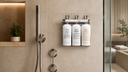
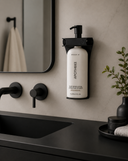
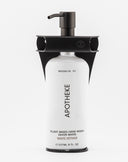
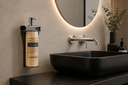
Wet area or vanity. Wall fixtures sit inside the shower. Countertop carriages sit on the vanity and suit properties that can't drill, or a pilot you want to reverse.
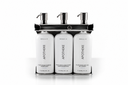
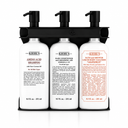
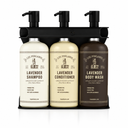
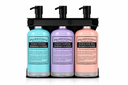
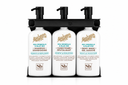
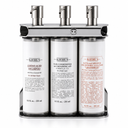
How many products. Count what you want offered, not what you currently buy. Shampoo, conditioner and body wash needs a triple; a fourth product means a quad or a second fixture.
Room tier. Decide whether the program is uniform property-wide or steps up by category. Both work. Mixing them by accident does not.
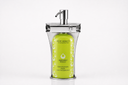
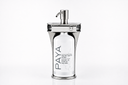
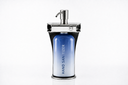
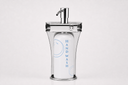
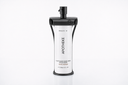
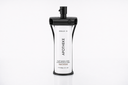
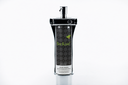
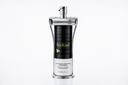
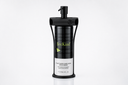
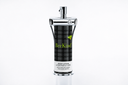
Bottle formats
| Format |
Capacity |
Best for |
| Oval |
9 oz (266 ml) |
Standard guest rooms, highest turnover |
| Cylinder |
12 oz (355 ml) |
Larger rooms; fewer refill cycles |
| Oval — Spa |
16 oz |
Spa, pool and fitness; longest interval. Amber available |
Pumps dispense 3 cc per press. Bottles and pumps are rated at 2+ years in service.
Dimensions and wall space
Every fixture stands 8.5" high. Width is the number to check against your usable wall. Allow roughly 1" above for pump clearance.
| Fixture |
Width |
Depth |
Weight empty |
| Wall — single, 9 oz |
3.75" |
1.734" |
13 oz |
| Wall — double, 9 oz |
5.4" |
1.734" |
29 oz |
| Wall — triple, 9 oz |
8" |
1.8" |
29 oz |
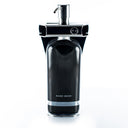
| Countertop — single |
3.5" |
3.25" |
15 oz |
| Countertop — double |
6.75" |
3.25" |
29 oz |
| Countertop — triple |
9.75" |
3.25" |
43 oz |
Depth is the figure people forget. Under 2" on wall models keeps the fixture clear of a shower door swing.
2. Choosing a finish
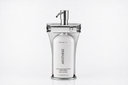
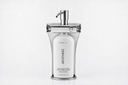
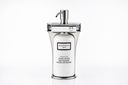
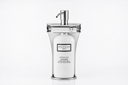
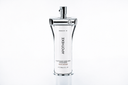
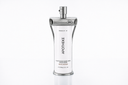
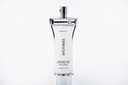
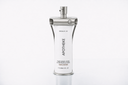
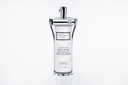
Fixtures are marine grade steel — chosen for corrosion resistance in a room that is humid every day and cleaned with chemicals every day. The finish is what guests see; the substrate is what determines whether you buy again in three years.
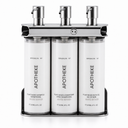
Polished. Classic and bright. Shows water spotting most readily — worth weighing in hard-water regions.
Brushed. The most forgiving day to day. Hides spotting and fingerprints, and coordinates with the brushed hardware already in most bathrooms.
Brushed Gold. The strongest design statement of the five. Best where the rest of the room's hardware supports it.
Bronze. Warm and traditional. Reads well against stone, wood and warmer tile.
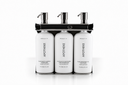
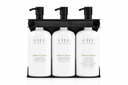
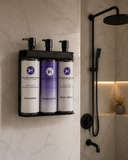
Black. Suits dark and contemporary rooms. Shows dust and soap residue more than it shows water.
Confirm availability when you specify. Not every finish is offered in every configuration. Check the finish you want against the fixture you need before the quote goes out, rather than after.
One practical rule: match the amenity fixture to the bathroom hardware two feet away, not to the room's overall palette. A fixture that clashes with the shower valve is far more noticeable than one that contrasts with the tile.
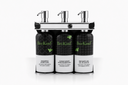
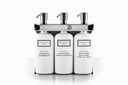
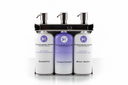
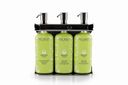
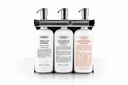
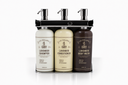
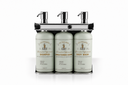
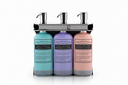
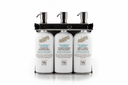
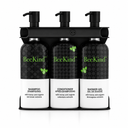
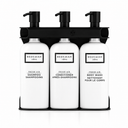
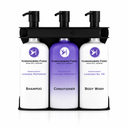
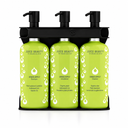
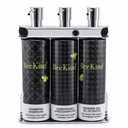
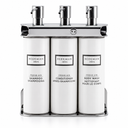
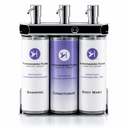
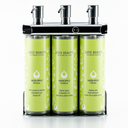
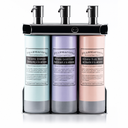
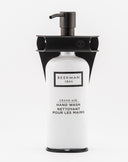
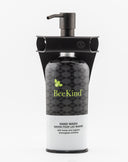
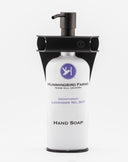
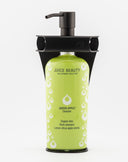
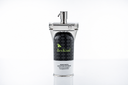
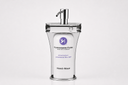
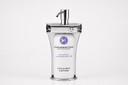
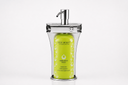
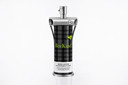
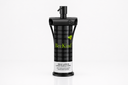
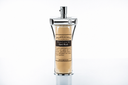
Branding. Bottles are specified with a sleeve choice, which is how your own branding carries onto the bottle. The fixture and the formulation inside it stay separate decisions.
3. What an amenity program actually costs
This is the section worth taking to your budget meeting. Most properties evaluate suppliers on cost per unit — the easiest number to compare, and the least useful, because four of the five real costs never appear on the amenity invoice.
-
Cost per occupied room, not per unit. Unit price hides usage rate. A cheaper bottle guests open and abandon can cost more per occupied room than a dearer one. Calculate against occupancy, not purchase orders.
-
Housekeeping labor per turnover. Amenity checks in every bathroom, restocking, discarding partials, cart resupply, inventory counts, reorders. Real payroll — and because it sits inside housekeeping hours, almost never attributed back to the amenity program.
-
Waste hauling and disposal. Packaging volume you pay to remove, every week of the year.
-
Partials and shrinkage. Product that leaves with the guest, product discarded half-used because it can't be reissued, and product that walks. Measure this at your own property rather than taking any vendor's figure.
-
Fixture cost, amortized. A capital line, not an operating one. Spread across service life it behaves very differently in a budget than a recurring consumables order.
The exercise we'd recommend. Before the budget is finalized, sit down with your executive housekeeper and put a number on line two. Ask how long the amenity portion of a turnover takes, multiply by turnovers, multiply by loaded labor rate. Most properties have never separated that figure out. It is usually larger than expected — and it's the line that moves most when the format changes, while the unit price you negotiated stays roughly where it was.
4. Installation and refilling
No plumber, no contractor, no capital project. Property maintenance can install these. Here is what it actually involves, so you can plan it properly.
Check your wall surface first. Mounting tape is rated for smooth, clean, dry tile and marble. It is not intended for drywall. Fiberglass surrounds use construction adhesive instead. Screw mounting is available for any surface — stainless steel screws only, still with the silicone bead. Installation is the responsibility of the purchaser or installer.
How refilling works
Every kit ships with two sets of bottles and pumps. That is deliberate: one set in the room, one filled and waiting in housekeeping. Housekeeping swaps rather than waits.
Key into the locking mechanism, press and turn counter-clockwise. Pull the bracket face forward and slip the bottle out through the top. Swap in the full one, line up the bracket, turn clockwise to lock.
Bottles are filled in housekeeping, never in the guest bathroom. Prime pumps before they go in.
Security
The locking collar and key are standard. If your property has had walk-off problems with amenities, this is the reason the format holds up where loose bottles don't.
5. Five questions to ask any amenity supplier
Ask us these. Ask everyone else too. The answers will tell you more than a price sheet will.
-
What is the housing made of, and how long does it last? Finish is cosmetic. The substrate determines whether you are buying again in three years.
-
Is the finish I want available in the configuration I need? Ranges are rarely complete. Confirm before you specify, not after the quote.
-
What does installation require on my wall surface? Tile, drywall and fiberglass are three different answers. A supplier who gives you one answer hasn't asked the question.
-
What happens if a fixture fails in year two? Warranty terms, replacement lead time, and who pays the labor.
-
What is the total cost per occupied room, including labor? Anyone can quote a unit price. The suppliers worth working with can help you model the rest.
Where to start
If you are building a 2027 budget, the useful first step costs nothing: work out your current cost per occupied room, including the housekeeping labor. Whatever you decide afterward, you will be deciding with a real number instead of an invoice.
When you want a comparison against your current program, we are happy to build one.
Aquamenities · info@aquamenities.com · (925) 938-2782
2490 Arnold Industrial Way, Suite E, Concord, CA 94520
Frequently asked questions
Can fixtures be installed without drilling?
On smooth tile or marble, yes — double-sided mounting tape with a silicone perimeter bead. Not on drywall; the tape isn't rated for it. Fiberglass surrounds use construction adhesive instead. Screw mounting is available for any surface, stainless steel screws only.
What comes in the box?
The bracket with locking mechanism, a key, two sets of bottles and pumps, and two 6" strips of double-sided mounting tape. Silicone is not included.
How long do bottles and pumps last?
Bottles and pumps are rated at 2+ years in service. The fixture housing is marine grade steel and outlasts them.
Can I put my own branding on the bottles?
Bottles are specified with a sleeve choice, which is how your branding carries onto the bottle.







The Hotel Bathroom Amenity Buyer's Guide
Most guidance on hotel bathroom amenities is written to sell you something. This one is written to help you ask better questions — of us, and of anyone else you're considering.
It covers what to choose, what it costs, and what installation actually involves. If you read one section, make it the one on cost. That's where amenity decisions usually go wrong.
1. Start with the room, not the product
The most common mistake is picking a fixture and then working out where it goes. Start the other way around.
Wall surface. Tile, marble, drywall and fiberglass all mount differently. This determines the installation method, so settle it before anything else.
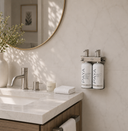
Wet area or vanity. Wall fixtures sit inside the shower. Countertop carriages sit on the vanity and suit properties that can't drill, or a pilot you want to reverse.
How many products. Count what you want offered, not what you currently buy. Shampoo, conditioner and body wash needs a triple; a fourth product means a quad or a second fixture.
Room tier. Decide whether the program is uniform property-wide or steps up by category. Both work. Mixing them by accident does not.
Bottle formats
Pumps dispense 3 cc per press. Bottles and pumps are rated at 2+ years in service.
Dimensions and wall space
Every fixture stands 8.5" high. Width is the number to check against your usable wall. Allow roughly 1" above for pump clearance.
Depth is the figure people forget. Under 2" on wall models keeps the fixture clear of a shower door swing.
2. Choosing a finish
Fixtures are marine grade steel — chosen for corrosion resistance in a room that is humid every day and cleaned with chemicals every day. The finish is what guests see; the substrate is what determines whether you buy again in three years.
Polished. Classic and bright. Shows water spotting most readily — worth weighing in hard-water regions.
Brushed. The most forgiving day to day. Hides spotting and fingerprints, and coordinates with the brushed hardware already in most bathrooms.
Brushed Gold. The strongest design statement of the five. Best where the rest of the room's hardware supports it.
Bronze. Warm and traditional. Reads well against stone, wood and warmer tile.
Black. Suits dark and contemporary rooms. Shows dust and soap residue more than it shows water.
Confirm availability when you specify. Not every finish is offered in every configuration. Check the finish you want against the fixture you need before the quote goes out, rather than after.
One practical rule: match the amenity fixture to the bathroom hardware two feet away, not to the room's overall palette. A fixture that clashes with the shower valve is far more noticeable than one that contrasts with the tile.
Branding. Bottles are specified with a sleeve choice, which is how your own branding carries onto the bottle. The fixture and the formulation inside it stay separate decisions.
3. What an amenity program actually costs
This is the section worth taking to your budget meeting. Most properties evaluate suppliers on cost per unit — the easiest number to compare, and the least useful, because four of the five real costs never appear on the amenity invoice.
Cost per occupied room, not per unit. Unit price hides usage rate. A cheaper bottle guests open and abandon can cost more per occupied room than a dearer one. Calculate against occupancy, not purchase orders.
Housekeeping labor per turnover. Amenity checks in every bathroom, restocking, discarding partials, cart resupply, inventory counts, reorders. Real payroll — and because it sits inside housekeeping hours, almost never attributed back to the amenity program.
Waste hauling and disposal. Packaging volume you pay to remove, every week of the year.
Partials and shrinkage. Product that leaves with the guest, product discarded half-used because it can't be reissued, and product that walks. Measure this at your own property rather than taking any vendor's figure.
Fixture cost, amortized. A capital line, not an operating one. Spread across service life it behaves very differently in a budget than a recurring consumables order.
The exercise we'd recommend. Before the budget is finalized, sit down with your executive housekeeper and put a number on line two. Ask how long the amenity portion of a turnover takes, multiply by turnovers, multiply by loaded labor rate. Most properties have never separated that figure out. It is usually larger than expected — and it's the line that moves most when the format changes, while the unit price you negotiated stays roughly where it was.
4. Installation and refilling
No plumber, no contractor, no capital project. Property maintenance can install these. Here is what it actually involves, so you can plan it properly.
Check your wall surface first. Mounting tape is rated for smooth, clean, dry tile and marble. It is not intended for drywall. Fiberglass surrounds use construction adhesive instead. Screw mounting is available for any surface — stainless steel screws only, still with the silicone bead. Installation is the responsibility of the purchaser or installer.
How refilling works
Every kit ships with two sets of bottles and pumps. That is deliberate: one set in the room, one filled and waiting in housekeeping. Housekeeping swaps rather than waits.
Key into the locking mechanism, press and turn counter-clockwise. Pull the bracket face forward and slip the bottle out through the top. Swap in the full one, line up the bracket, turn clockwise to lock.
Bottles are filled in housekeeping, never in the guest bathroom. Prime pumps before they go in.
Security
The locking collar and key are standard. If your property has had walk-off problems with amenities, this is the reason the format holds up where loose bottles don't.
5. Five questions to ask any amenity supplier
Ask us these. Ask everyone else too. The answers will tell you more than a price sheet will.
What is the housing made of, and how long does it last? Finish is cosmetic. The substrate determines whether you are buying again in three years.
Is the finish I want available in the configuration I need? Ranges are rarely complete. Confirm before you specify, not after the quote.
What does installation require on my wall surface? Tile, drywall and fiberglass are three different answers. A supplier who gives you one answer hasn't asked the question.
What happens if a fixture fails in year two? Warranty terms, replacement lead time, and who pays the labor.
What is the total cost per occupied room, including labor? Anyone can quote a unit price. The suppliers worth working with can help you model the rest.
Where to start
If you are building a 2027 budget, the useful first step costs nothing: work out your current cost per occupied room, including the housekeeping labor. Whatever you decide afterward, you will be deciding with a real number instead of an invoice.
When you want a comparison against your current program, we are happy to build one.
Aquamenities · info@aquamenities.com · (925) 938-2782
2490 Arnold Industrial Way, Suite E, Concord, CA 94520
Frequently asked questions
Can fixtures be installed without drilling?
On smooth tile or marble, yes — double-sided mounting tape with a silicone perimeter bead. Not on drywall; the tape isn't rated for it. Fiberglass surrounds use construction adhesive instead. Screw mounting is available for any surface, stainless steel screws only.
What comes in the box?
The bracket with locking mechanism, a key, two sets of bottles and pumps, and two 6" strips of double-sided mounting tape. Silicone is not included.
How long do bottles and pumps last?
Bottles and pumps are rated at 2+ years in service. The fixture housing is marine grade steel and outlasts them.
Can I put my own branding on the bottles?
Bottles are specified with a sleeve choice, which is how your branding carries onto the bottle.